
AI phone agent fills the bike shop in February
Published on May 11, 2026
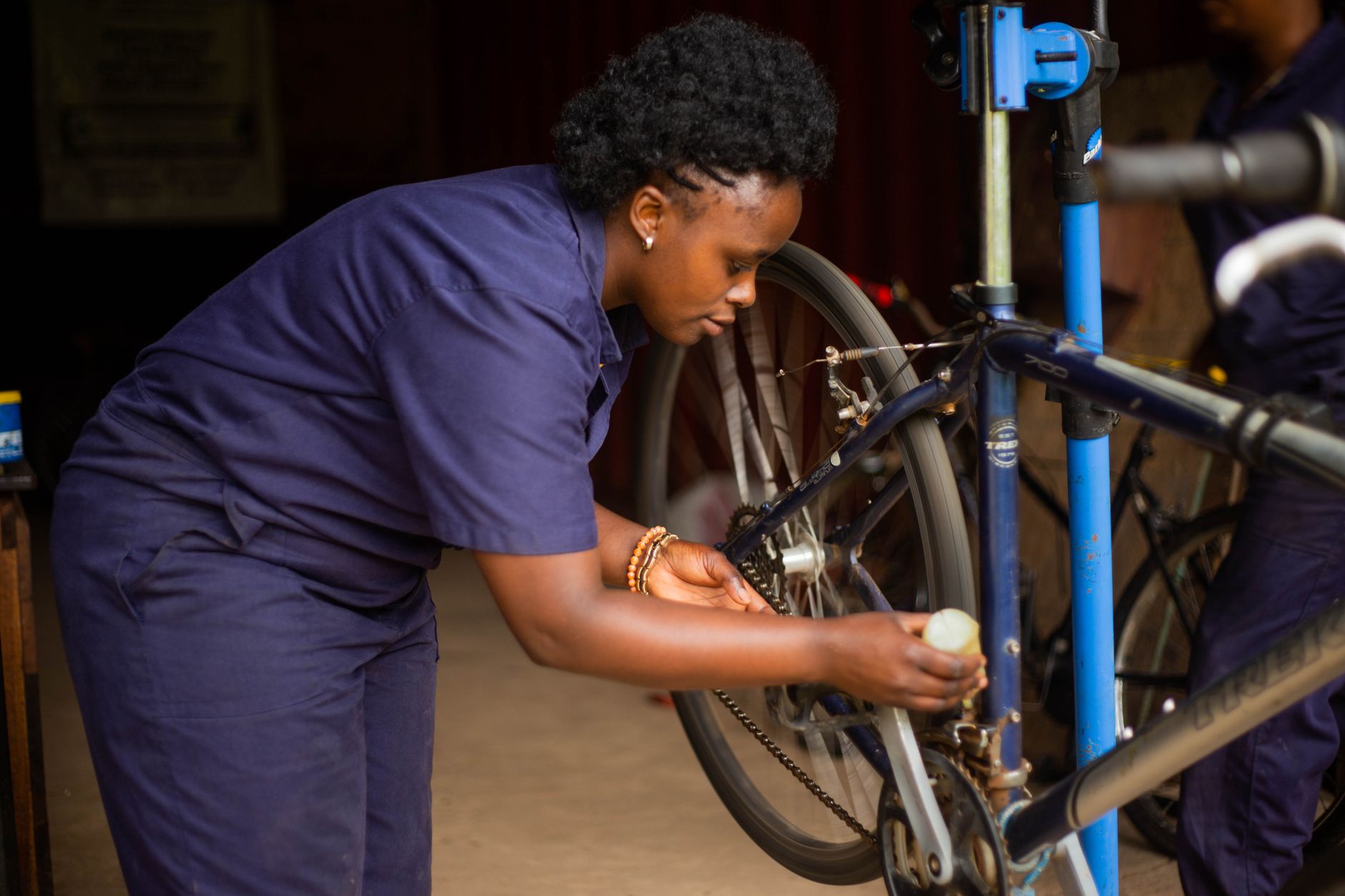
By the time the first warm days arrive, it’s too late
Every bike shop knows the pattern. In February, the work stands sit empty. Two mechanics have time on their hands, the phones are silent. Then the first sunny days hit in mid-March — and within 72 hours, the appointment calendar is booked out four weeks ahead.
The problem isn’t spring. The problem is that nobody reaches out beforehand.
Existing customers who’ve had their bike serviced with you only think of picking up the phone when they haul the bike out of the basement. By then, you’re already full. Customers land on the waitlist, they’re unhappy, and your team works flat out — while five weeks earlier, capacity sat unused.
At a glance: Bike shops lose revenue every winter because existing customers only call once the season is already underway. An AI outbound voice agent proactively calls customers with a service due in January and February and books appointments straight into the quiet weeks. The result: more even utilization, shorter wait times in spring, and the team sees only fully confirmed appointments in the calendar.
Why doesn’t this pattern change without active intervention?
Because reactive scheduling systematically reinforces the seasonal problem.
As long as your shop just waits for incoming calls, your customers pick the timing. And customers pick it when the bike spontaneously crosses their mind — usually on the first warm Saturday in March. By that point, you can’t pull appointments forward anymore.
The pattern can only be broken if you take the initiative earlier than your customers are used to. Not in March. In January.
How does an AI outbound voice agent work for the shop?
An AI outbound voice agent calls existing customers automatically, has a short conversation, and books an appointment into your calendar in real time.
Concretely, for a bike shop it works like this:
-
Data matching in December: The system checks your customer base against the service history. Result: a list of all customers whose last service was more than twelve months ago — or, for e-bikes, whose next battery check is due.
-
Call campaign starts in early January: The agent calls proactively. A sample dialogue might sound like this: “Hello, Mr. Schneider. This is the appointment assistant for Hoffmann Bike Shop. Your bike was last in for a service in February of last year. I still have open slots in the second week of January — would Wednesday or Thursday work for you?”
-
Direct booking: The agent offers two or three concrete slots and books immediately on a yes. No callback, no checking with the team.
-
Confirmation by text or email: The customer gets a link they can use to reschedule the appointment themselves if needed.
-
Handover for complex requests: As soon as the customer says they have a bigger problem — a cracked frame, a broken derailleur, a total loss — the agent hands over to the shop manager. That’s not a situation for automated scheduling.
Your team sees only the already-confirmed appointments in the calendar. No spreadsheets, no handwritten notes, no follow-up calls.
What does the shop need to bring to the setup?
Not every business is ready to start right away. Here’s what you should know upfront.
What you need to bring:
- A customer database with phone number, first name, and repair history — even a well-kept point-of-sale list works, if it’s complete
- A scheduling system that allows integrations, or at least an exportable calendar structure
- Documented consents for reminder calls (more on that in the next section)
Setup timeline: Realistically six to ten weeks from start to the first call. That includes data review, script tuning, technical integration, and a test campaign with a small customer group.
When is the effort worth it? The setup pays for itself as soon as pulling services forward into the quiet phase creates a handful of extra appointments per week that wouldn’t otherwise have been booked. With an average service job, breakeven is reachable within a few months of operation — provided the customer base is big enough. For a shop with fewer than 150 existing customers in the database, the effort is disproportionate.
For a general overview of when an AI phone agent is worth it at all, see: AI phone agent: what’s behind it and when is it worth it?
What legal requirements apply to outbound calls?
This is the part many businesses overlook. And the one that actually has consequences if ignored.
Consent is mandatory — even for existing customers.
Under German law, Section 7(2)(2) of the Unfair Competition Act (UWG) requires express, prior consent for marketing calls to consumers. A ruling by Germany’s Federal Administrative Court in January 2025 made this clear once more: even a friendly reminder call to an existing customer counts as marketing if it points to a service.
Practically, that means for you:
- At the customer’s next shop visit, add a short consent line to the repair form: “I agree that the shop may remind me of upcoming service appointments via automated phone call.”
- Document that consent with a date in your point-of-sale system
- Section 7a UWG requires you to keep that documentation for five years
Transparency during the call itself:
The first second of the conversation must be clear: the customer is talking to an automated system, not an employee. That’s not optional — it’s mandatory. Wording at the start of the script: “This is the automated appointment assistant for [shop name].” Without that notice, you’re in a legal gray zone.
Text confirmations after the call also fall under the requirements of the UWG — the consent covers both if it’s worded accordingly.
Further guidance on data privacy and AI use is in the post AI tools and data privacy: what small businesses need to know.
What we pay attention to during implementation
Three points decide whether the campaign works or fizzles.
1. Set the start date early enough
If the AI only starts calling once the first warm days arrive in March, the shop is already full. The call comes too late — and the whole point of pulling appointments forward is lost. Plan the campaign start for January, early February at the latest. That requires setup and data review to be finished in December.
2. Clean the customer database before the first call
Bike shops often maintain their customer data less systematically than auto repair shops. Bikes change owners, customers move, or the bike simply gets retired. If the AI calls someone whose bike is long gone, that’s annoying — and it happens if you skip the data check. So build a simple feedback channel into the script: “If you no longer have your bike, just let us know — we’ll remove you from our system.” That keeps the data clean and avoids irritation.
3. The voice and script sound like your shop, not a call center
Bike customers bond with their local mechanic. Someone who’s talked to the same employee for years reacts more sensitively to an impersonal call than an auto-repair customer would. That means: the call must be short, reference the customer’s context directly (which bike, when they were last in), and use a friendly, clear voice. A robotic tone or generic phrasing with no connection to the shop does more harm than good. Take enough time on the script tuning — this is not a detail.
Where AI doesn’t work for this use case
Not every situation fits this process.
- New customers: Outbound calls only work with existing customers from whom you have documented consent. This channel is not suitable for new-customer acquisition.
- Complex damage reports: If a customer describes during the call that their frame is cracked or the e-bike won’t run after a crash, that’s not a case for the agent. The script must recognize these situations and hand over to a human directly.
- Customers without consent: Anyone without documented consent doesn’t get called — regardless of how long they’ve been away from the shop. No workaround.
- A very small customer base: Below roughly 150 existing customers with a service due, the setup effort isn’t worth it. A personal follow-up campaign is more efficient here.
Frequently asked questions
Are we even allowed to call existing customers automatically?
Yes — but only with prior express consent. It must be documented in writing and kept for five years. Without that foundation, you shouldn’t start an outbound campaign, no matter how the call is worded.
Do we have to say at the start of the call that it’s an AI agent?
Yes. Every call must be clearly identified as automated at the start. Wording like “You’re speaking with our digital appointment assistant” meets this requirement. That’s not a matter of good style — it’s a legal requirement.
What happens if a customer describes a complex problem during the call?
The script recognizes such situations and routes the customer to the shop — either by direct transfer or by arranging a callback. No AI agent should attempt a major repair diagnosis.
We haven’t maintained our customer data systematically. Is that a problem?
It delays the setup, but it’s not a dealbreaker. Data cleanup just takes longer — often an extra one to two weeks. Plan this step deliberately before you start the technical configuration.
Do older customers react negatively to AI calls?
That’s a real point. Customers over 65 are statistically more skeptical of automated voices than younger ones. You can either exclude this group from the campaign or use an especially short, matter-of-fact script — and always offer a path to a real employee. The option “Please connect me with someone” should work at any time.
My take
The seasonal problem in the bike business is not a law of nature. It exists because nobody actively pushes against it. An AI outbound agent is a concrete tool for spreading appointments earlier — not through pressure, but through proactive reminders to customers who will need the service eventually anyway.
The setup is not a weekend project. If you want to see results in February, you have to start laying the groundwork in October. That includes data quality, consents, and script tuning — not just the technology.
Once all of that is done carefully, the process runs autonomously afterward. Your team no longer has to worry about scheduling — just about fixing bikes.
If this sounds like your business
If you run a bike repair shop or a bike store with its own service department and have a customer base of at least 200 existing customers in your database, I’d be glad to take a look at this together.
Drop me a short note about which point-of-sale system or workshop software you use — then I can tell you directly what setup effort is realistic and whether the technical integration will be straightforward or involved.
By email: marketing@gudrun-ponta.de Or directly: +49 176 21110218
I’ll get back to you with an honest assessment — no sales pitch, no slide deck.